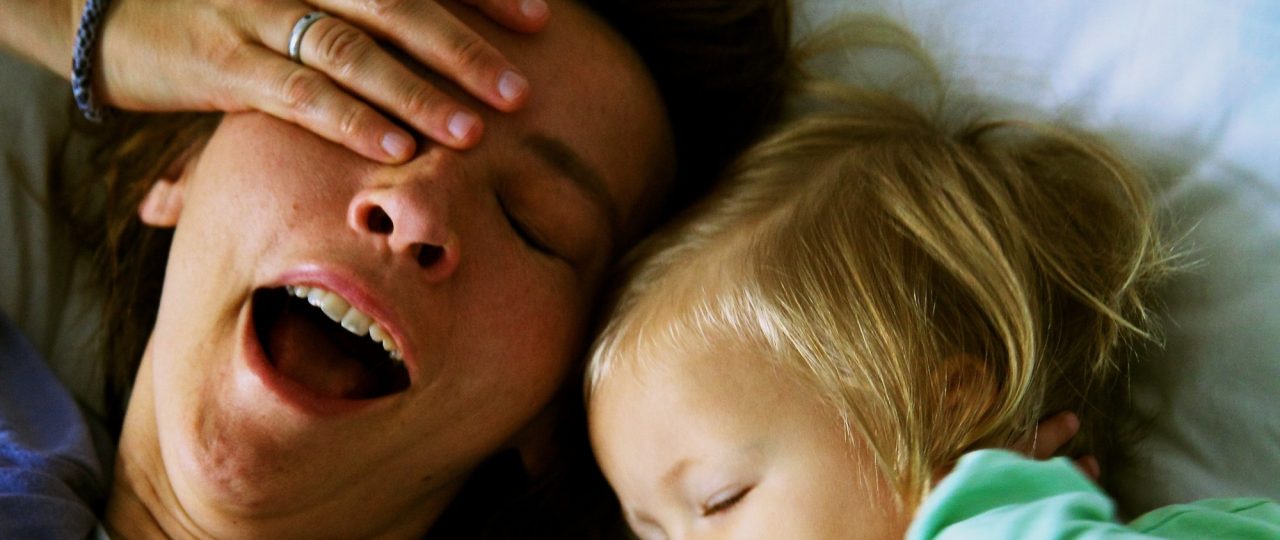
It's hard to know how to start a post about one of the most hectic weeks of our lives.
But here goes.
When last I blogged, Mimi was still dealing with what we thought was just a bad version of the cold we'd all had. Her coughing was still scary as hell, and shortly after I posted, it got worse. She wouldn't keep any milk down and instead projectile vomited it all over me time and time again. I called her pediatrician's office Monday evening, and they said to replace her overnight feedings with Pedialyte, keep a close eye on her, and then take her to her pediatrician the next day.
She was only slightly interested in the Pedialyte, and grew increasingly lethargic. When we arrived at her pediatrician's Tuesday, I lost it when I saw that her weight had dropped by 11 ounces -- a big percentage of our tiny human. The doc must've been startled to walk in and find me crying, a baby in one arm, a crumpled up list detailing Mimi's recent feedings, or lack thereof, in the other. She examined Mimi and tried to comfort me as she explained that the baby needed to spend the night at the hospital as she was dehydrated and may have some oxygen issues, based on her heart rate. The doc explained that having Mimi under watchful medical eyes would also ease the burden on my shoulders, which I must say were feeling heavier and heavier as I felt helpless watching Mimi's illness worsen at home.
I pulled myself together and headed over to the ER to get admitted. When you show up in the ER with an itty bitty kiddo, you don't wait long. Since they had tested for RSV and influenza at our ER visit the week before, they wanted to complete the typical trifecta of tests they do when presenting the symptoms Mimi had. Sadly, this included a lumbar puncture, aka a spinal tap, to rule out a brain infection like meningitis. We had avoided it previously because they thought Mimi's fever was a result of a UTI, which was later ruled out by further tests done by our pediatrician. Brent and I left the room when the doctors did the spinal tap, per their recommendation. I lost it when I heard Mimi screaming across the ER, although I was comforted to hear that she didn't even cry when they actually performed the test. Her crying was because she didn't like the way they were holding her to get situated for the test.
Various doctors made their way through the ER to see Mimi. The ER doc on duty thought she looked fine and not at all dehydrated, but then he got the background scoop from Mimi's pediatrician on the phone and understood everyone's concerns. Some doctors from the hospital's pediatric ward came to examine her, and that's when pertussis (aka whooping cough) was first brought up as a potential cause. Brent had pertussis shortly after we got married, way back in 2006, but we both clearly remember the awful cough like it was yesterday. That became the leading theory while we waited for tests to come back, and they began treating Mimi accordingly.

Because pertussis is so contagious, they didn't want to admit her to the standard pediatric ward. They planned to admit us to a more isolated area of the pediatric ward, sort of a make-shirt pediatric intensive care unit (PICU) because there were no other patients in the actual PICU. While we waited in the ER for our upstairs room to get prepped, one of the nurses noticed Mimi was having apnea episodes -- that is, she would just stop breathing until someone roused her. It was alarming at first, but some other staff noted that it was...normal? Or perhaps not unusual? Or something not to worry about? It's all kind of a blur, so I don't exactly recall what their exact reactions were, but some folks were concerned and some weren't.
Mimi was hooked up to an oxygen tube, as well as an oxygen monitor, all of which they brought with us as they wheeled me holding Mimi in a hospital bed up to the pediatric ward. On our way one of the nurses stopped us to rouse Mimi out of one of her episodes. Then as we transferred into our room, the episodes kept happening more and more.
We met our doctor and nurses for the evening, all whom were amazing. The doctor heard Mimi's coughing, the one where she'd gasp for breath and turn a dusky color and scare the daylights out of me, and he said he'd bet money it was pertussis, too. She didn't have the wheezing and signature whoop of pertussis, but otherwise it sounded like the newborn version of the telltale cough. They ran some tests, which wouldn't come back until the next day.
Each time the oxygen monitors would alarm when Mimi had an apnea episode, the staff was right there to rouse her out of it.
As the alarms grew in frequency, so did my anxiety about the situation. That first night was one of the scariest nights of my life. I knew she was under top-notch care, but seeing the concern in their eyes as they rushed to her side is not something any parent wants to experience. The fragility of her life became all too clear, and it was understandably hard to keep it together.
With her increasing episodes, the doctor decided it was time to move up from the standard oxygen tube to a
CPAP machine, a sort of external ventilator that would force air into her lungs rather than just offer oxygen in her nose, to further assist in her breathing. It was then that they warned us that if it didn't seem to help, they might have to insert a breathing tube. I've seen enough medical dramas to know that you try to avoid intubation whenever possible. It's scary and invasive and a last resort, but it's a necessary evil during desperate times.
The CPAP machine wasn't producing the exact results the doctor was looking for, and it was then the doc decided to move her to the real PICU in the building over. He explained that if they needed to insert a tube, they should be on the floor that was equipped accordingly. It took half a dozen people to wheel Mimi, her bed and monitors over to the PICU. We were the only patients there, which was simultaneously relaxing and eerie. The beauty of a PICU is that nurses typically care for much fewer patients than a standard ward, hence the intensive portion of the intensive care unit. To have such one-on-one care for our wee one was a comfort.
Because the breathing tube was a possibility, I couldn't nurse Mimi. They didn't want anything in her belly that could come up and choke her during the insertion. They provided her with nutrition via her IVs. Thankfully the hospital was breastfeeding-friendly, providing me with a pump, sterile parts and storage for my milk. I didn't realize how much I missed nursing her until I couldn't.
It was nearly 2 a.m. by the time we managed to get settled in our new room. One of the "perks" of being in the PICU is that the rooms are much larger than the pediatric floor to ensure enough room for necessary equipment. That also meant there was enough room for Brent and I to each have cots, allowing us to stay close to our sweet girl.
The rest of that first evening was a blur of trying to rest, a barrage of alarms and accompanying medical staff taking care of Mimi.
The next morning we were informed that it wasn't pertussis, but in fact, RSV, a common respiratory virus that can be (obviously) very scary for little ones like Mimi. Her apnea episodes were caused by RSV's thick mucous, as it doesn't take much to congest little newborn airways.
No one is certain why the test for RSV they conducted in the ER the week before came back negative. One of the nurses mentioned that the test has an 80% detection rate. Or maybe the ER nurses who conducted the test may not have been experts in administering tests to newborns. Our pediatrician explained that the ER test is pretty sensitive, but they did a slightly different, even more sensitive test when we were admitted, so it was more likely to correctly diagnosis it.
There's no cure, nor any medications, per se, to treat RSV. So we spent two more nights in the PICU, where respiratory therapists, nurses and doctors helped Mimi recover with additional oxygen, frequent suctioning of her nose and lungs, and heavy patting on the back to help break up the mucous. She eventually progressed enough to get taken off the CPAP machine and placed back onto the typical oxygen tube. With the threat of the breathing tube gone, I was able to nurse her again.
Sweet Em did a wonderful job enduring all this craziness. She stayed with my in-laws while Brent and I were at the hospital. Brent had left early enough to drop her off at school a couple of days, but I hadn't seen her in a while and was missing her dearly. So I surprised her one night at Grandma's and took her to dinner at the nearby mall for her favorite, broccoli and beef.
We popped into the Hallmark store, where she chose
a mini Ariel doll for me to take back to Mimi.
As it turns out, the next night when Mimi had improved enough to leave the PICU for the regular pediatric floor, they gave us a very fitting room.
My visit to Em might've been too much for her. It was heartbreaking to hear her sobbing on the phone later that night about how much she missed me. Since I was able to nurse again, it made sense for Brent to pick up Em from Grandma's and take her home. As much as she said she needed me, she was content to be with her daddy again.
Over the next two nights in pediatrics, they weaned Mimi from the oxygen, and when she did well on room air, we were ready to be discharged. Her cough was nearly gone, her lungs were clear, and she wasn't having anymore apnea episodes.
We were ready to go home.
While six days in the hospital is no picnic, we managed to stay positive. And during our stay, Mimi gave us a nice surprise by starting to give us real smiles. I thought it seemed fairly early, at just a little over four weeks, but the interweb told me it's early but entirely possible. She's given us lots of "real" smiles since then, so I'm not attributing it to gas at this point.
Some site noted that there's an anthropologic theory suggesting that babies smile as a survival mechanism because, really, who could hurt a face like this?
Maybe all of the poking and prodding initiated her instinct to kick her cute up a notch.
We're thrilled to have our baby girl home and healthy. Thanks to everyone who sent continued positive thoughts our way.